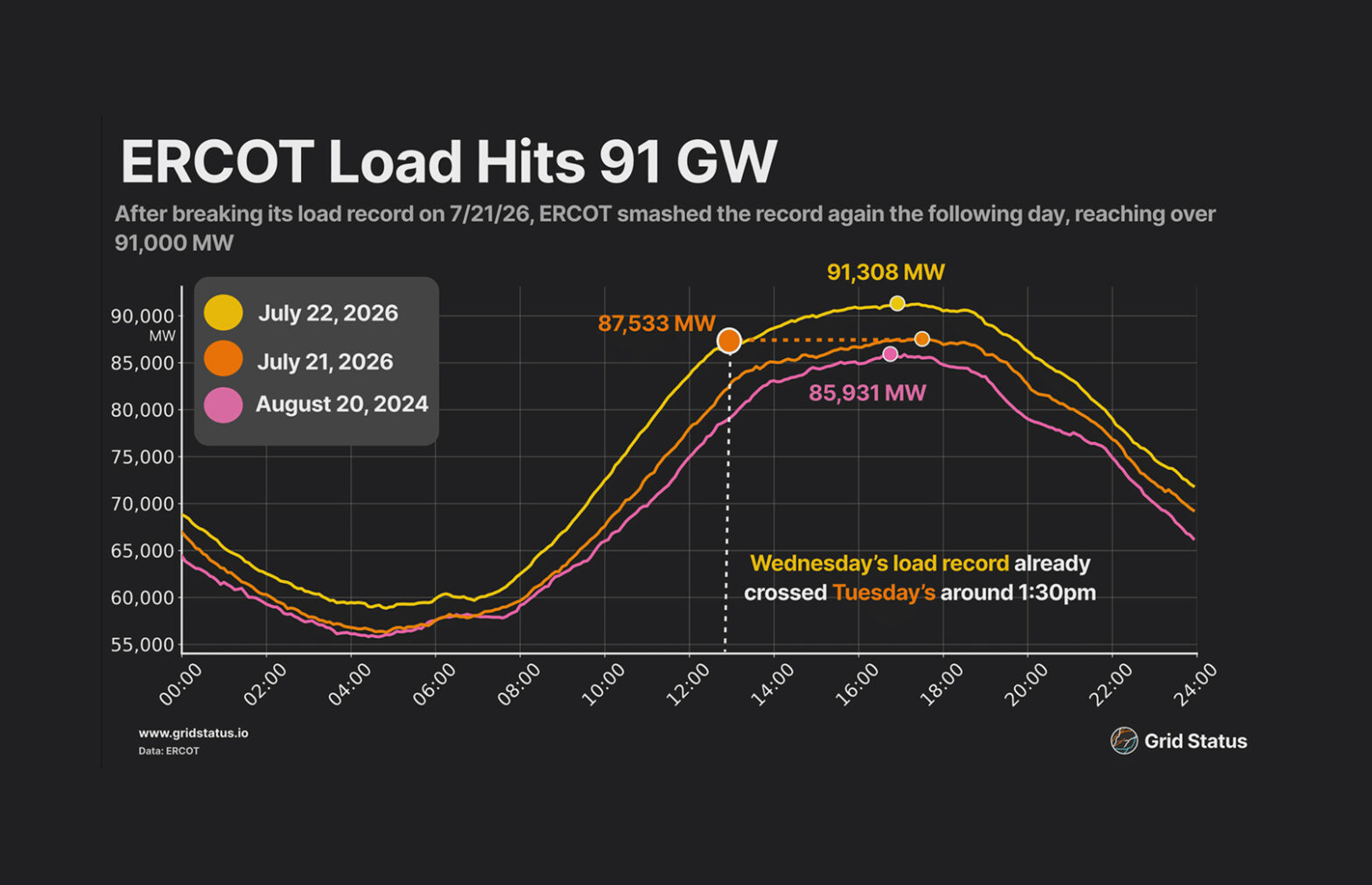
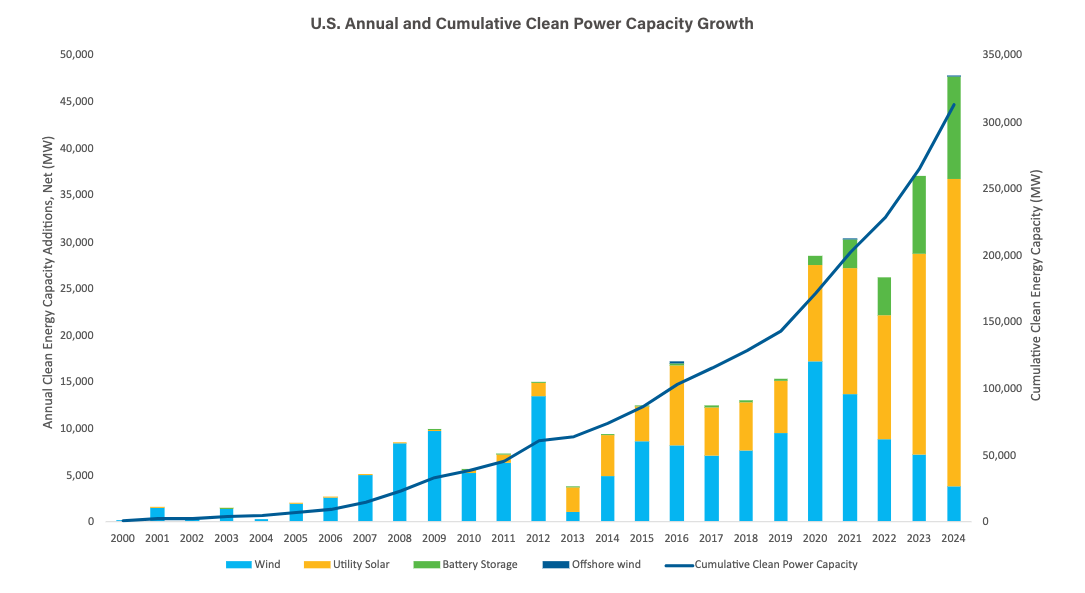
The summer of 2026 was the warmest on record for the United States, and it pushed or broke records across much of Texas. ERCOT, the power grid covering most of Texas, set records for electricity demand this summer while keeping the lights on, air conditioning running, and wholesale energy costs stable. Moreover, Texas’ nation-leading investments in battery storage, wind energy, and solar energy helped the grid weather the season without emergency conservation calls.
On September 29, 2026, the Reliable Grid Project hosted a discussion recapping the ERCOT grid’s performance this summer. Experts highlighted the following key takeaways:
The briefing featured Joshua Rhodes, research scientist at the University of Texas at Austin and host of the Energy Capital Podcast; Nikhil Kumar, program director at GridLab; and Juliana Gianni, policy analyst at Goff Policy. Oliver Bernstein of the Reliable Grid Project moderated.
The Galveston County Daily News and other outlets covered the briefing.
Rhodes opened by answering the question he hears most: Why did ERCOT have so few conservation alerts this year? Demand set a record in July, he explained, but so did wind in June, solar through the end of July, and battery output repeatedly throughout the summer. Through the first half of 2026, wind supplied about 27% of ERCOT's electricity and solar supplied about 16%, with both still growing.
The timing, he said, matters most. "The sun that heats up all the buildings and has us air-condition our homes is the same sun that makes electricity in solar panels," Rhodes said. That pushes the tightest grid hours to just after sunset and before the wind picks up, a window the current battery fleet is well suited to cover.
Kumar offered a snapshot of how the grid responded on ERCOT’s peak usage day. On July 22, ERCOT hit a peak demand of 91.3 gigawatts. Solar produced 32% of the grid's power that day, and batteries discharged nearly 12 gigawatts in the evening. "You kind of rode through that peak demand day with not much of an issue," he said.
Kumar contrasted Texas’s grid with PJM Interconnection, the largest grid in the country, which supplies power to 67 million consumers in 13 states from the midwest to the mid-Atlantic.
PJM’s electricity demand peaked at roughly 168 gigawatts this summer, but wind and solar make up only about 4% of its generation mix, and it has hardly any battery storage capacity. To compensate, grid operators had to fire up expensive coal and gas plants ahead of time, which boosts energy costs, and rely on U.S. Department of Energy emergency orders that let some thermal generators run past their emissions limits. California’s grid, which like Texas has abundant solar and batteries, saw a peak of 47 gigawatts; that was not a record for the region.
The price difference was stark. Kumar compared a mid-August Texas day in 2023, when wholesale prices reached $5,000 per megawatt-hour, to a similar day in 2026, when prices stayed around $400, even with significantly higher demand from data centers, crypto mining, and population growth. "A huge decrease," he said, "mostly because you had resources that don't need any fuel to operate."
Gianni explained the policy and market design behind Texas's reliability success. ERCOT is an energy-only market, which pays generators for the power they actually deliver (rather than for standing by as capacity). Because wind and solar generation have no fuel costs, they bid into the market cheaply and are dispatched ahead of more expensive thermal plants when market conditions allow, creating what she called a direct financial incentive to build renewables.
Texas has a largely separate grid, controlled by state regulators not federal ones. This lets new generation projects move through the grid interconnection process faster than they can elsewhere.
Because of this, the market tends to encourage the fastest, cheapest forms of generation—and that increasingly means renewables.
Kumar said the state's streamlined interconnection and geographic mix of wind and solar make it a model other regions could follow. On cost and speed, he noted that a new gas plant costs about $3,000 per kilowatt, or roughly $3 billion for an average-sized plant before pipeline costs are factored in, and can take years to build. Solar and batteries, by contrast, cost a third of that or less and can be built in 18 to 24 months.
Winter: Rhodes said that moving forward, the success of solar and batteries means ERCOT’s tightest windows will be on early winter mornings, when people are getting up and out the door before the sun rises. The same battery fleet that covered grid crunches on summer evenings will be similarly critical on winter mornings. Kumar noted solar now supplies 8–10% of ERCOT's power even in winter, up from under 2% in 2021. He also cited ERCOT's winterization audits as an important step for ensuring reliability. Rhodes's remaining concern is the natural gas system, which is regulated by the state’s Railroad Commission and has been less transparent than the electricity sector about its winter preparations. "How would the natural gas sector, which is highly coupled to the electricity sector, fare?" he asked.
Load growthThe increase in the demand for electricity over time. It sig...: ERCOT's interconnection queue is around 475 gigawatts, about five times this summer's peak demand, though only a fraction of that generation will likely be built. Gianni said ERCOT's new batch study process (which studies large loads together rather than one at a time) will create a more realistic and reliable interconnection path for large-load power consumers such as data centers. She expects some new natural gas capacity to be built as a "bridge fuel" in the short term, with ERCOT increasingly reliant on storage, wind, and solar capacity. Rhodes noted that more than 100 gigawatts of energy storage is already in the generation queue, and that many data centers will consume power during daytime hours when solar is strong.
TransmissionThe process (and infrastructure) of moving large amounts of ... and staying grid-connected: Gianni emphasized that large-load customers can, should, and generally want to pay their fair share for transmission upgrades, which in turn will strengthen the grid for everyone. She argued that grid-connected data centers deliver more benefit than "islanded" facilities—often less-efficient gas plants built off-grid to power large-load projects—especially since a connected generator can be called on in an emergency like another Winter Storm Uri. Rhodes agreed: "It's a lot harder than most people think to be an island."
The panelists' message was consistent: competitive market signals and policies that let Texas add cheap, tested, and fast-to-build resources are working. Renewables and batteries held Texans’ energy costs down and kept the lights on through a record summer. As demand grows, they're poised to play a central role in keeping Texas's grid both reliable and affordable.
For the briefing recording of the webinar, charts, or interview with our experts, contact oliver@reliablegrid.org.