An accelerated stakeholder process used in PJM Interconnection to resolve urgent, contentious, and time-sensitive issues that cannot be resolved through the normal stakeholder process. The process involves several stages of discussion and proposal development, culminating in a submission to the Federal Energy Regulatory Commission (FERC) for approval. The CIFP process has been used in recent years to discuss large load additions (2025) and resource adequacy (2023).
Measurement used to calculate how much an energy resource–such as a wind farm or solar array–contributes to the overall reliability of the grid. It assesses the resource’s ability to meet electricity demand, particularly during peak usage periods, and is especially useful for variable renewable energy sources whose output depends on factors like weather conditions.
Refers to any unwanted or unplanned electrical event that interferes with the normal operation of the electrical grid. These can manifest in power outages, surges, and other events, and can originate from various sources within the electrical grid, such as loss of a large generating unit or another grid asset, such as a transmission line or transformer.

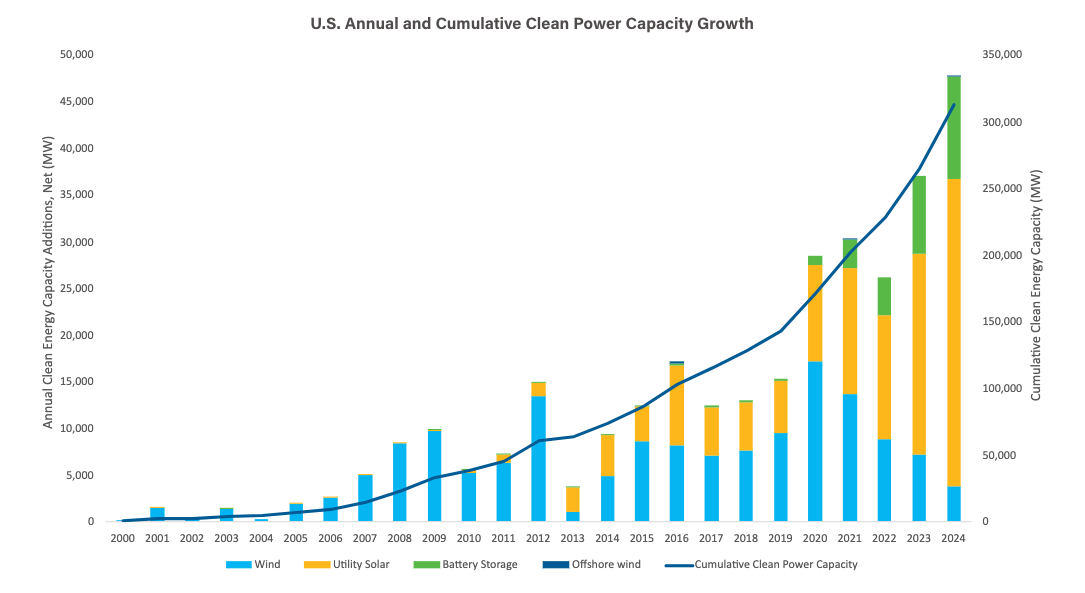
The American Clean Power Association (ACP) released its Snapshot of Clean Power in 2024. The data from ACP demonstrates an industry entering a new chapter with incredible momentum.